By job
Sidewalk and street closure equipment
Closing a sidewalk means building a safe detour, not just blocking the path. Cities usually want a continuous barrier people cannot step over, a clear alternate route, and devices that a cane can detect.
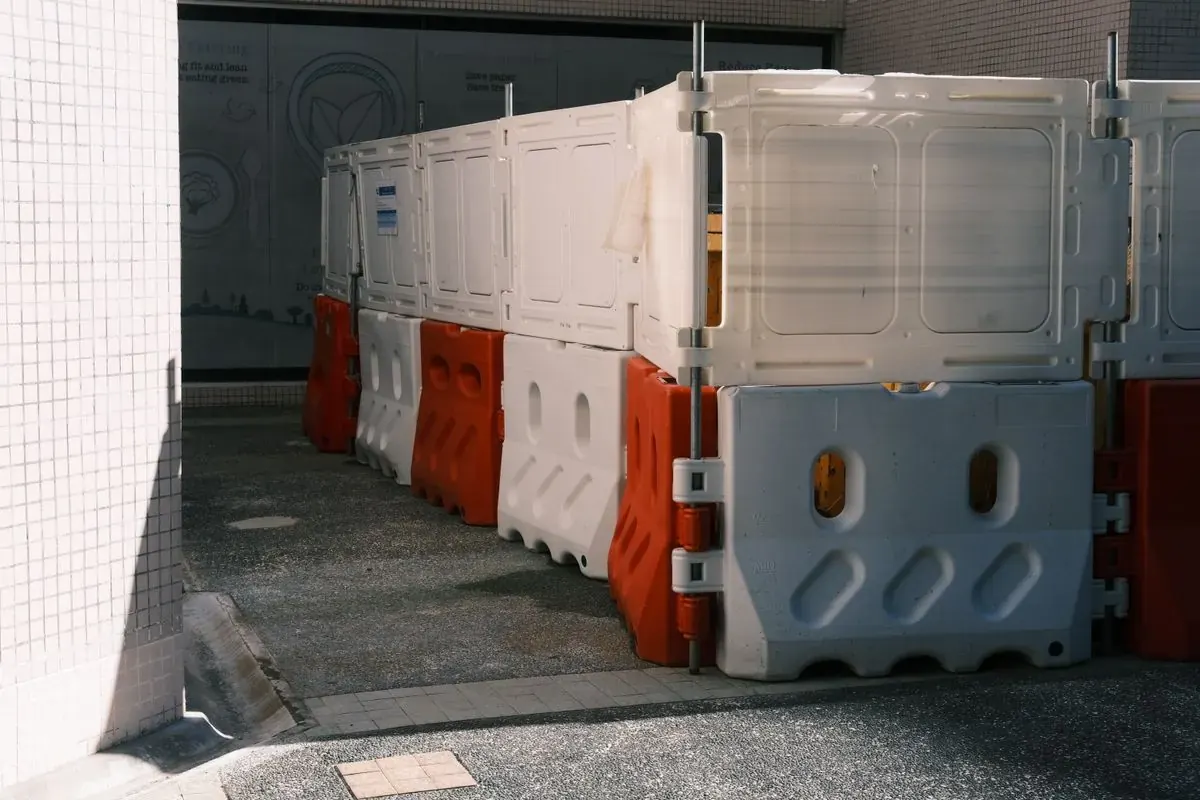
Water-filled barriers are the common choice because they form a solid wall without heavy equipment, and they take a fence topper where full height is required.
Get a quote
No price posted here. Tell us what you need and where.
What to order
- 42 in Interlocking Water-Filled Barrier, 6 ft
A continuous wall along the closure and the pedestrian detour.
- Water-Filled Barrier with Fence Topper
Full-height enclosure where the work area must be sealed off.
- Stackable Water Barrier, 32 x 48 in
Short runs around pits and driveways on narrow sidewalks.
- 28 in Reflective Traffic Cone, 7 lb
Marking the transition into a parking-lane walkway.
Planning tips
Check the permit first
Most cities require a permit for sidewalk or street closures, and the permit often names the devices and the detour layout. Send it with your quote request and we will match it.
Keep the detour accessible
Pedestrian channelizing devices should form a continuous, detectable edge for people using a cane, with no gaps at joints. Interlocking water-filled barriers do this well.
Questions
What barrier do cities accept for sidewalk closures?
It depends on the city and permit, but continuous interlocking barriers, often water-filled with a fence topper, are widely accepted because they are solid, detectable and hard to step over.
Other jobs: Crowd control equipment for events and festivals · Construction site perimeter and security equipment · Parking lot and garage traffic control · Lane closure and road work equipment · Traffic and crowd control for schools and campuses